
By: Ellin Ivarsson, Leonardo Canon Rubiano, and Katherine Beltran
Cities worldwide are seeking smarter ways to enable quality access to jobs while reducing congestion, cutting emissions, and ensuring that road users contribute fairly to the externalities they generate. The city of Bogotá, Colombia is no exception. With mounting pressure on its road network and increasing reliance on private vehicles, the city is accompanying investments in mass transit systems with modern traffic demand management (TDM) tools—such as congestion charging and externalities fees—to promote cleaner, more equitable mobility.
Building Bogotá’s Analytical Foundation with Korean Expertise
To support this effort, the World Bank’s Korea Green Growth Trust Fund (KGGTF) has helped the Bogotá Secretariat of Mobility (SDM) evaluate how different TDM strategies can be adapted to the city’s context, drawing on global best practices and data-driven analysis. This work included:
- Diagnosing congestion and mobility patterns through new indicators.
- Evaluating charging scenarios, geographic boundaries, tariff structures, and equity considerations.
- Assessing financial implications, including expected revenue and cost requirements.
- Reviewing technological options for payment, registration, enforcement, and monitoring.
- Extracting lessons from international leaders—including London, Stockholm, Milan, Singapore, and Seoul.
In particular, the Seoul Metropolitan Government (SMG) and the Seoul Urban Solutions Agency (SUSA) have shared their expertise in intelligent transportation systems and coordinated TDM policies through structured knowledge exchange, aligned with Bogotá’s priorities on digital enforcement, automated monitoring, and system integration.
These efforts strengthened Bogotá’s technical readiness and opened the door for deeper collaboration with Korean partners.
Turning Knowledge into Action through the Seoul ODA Challenge
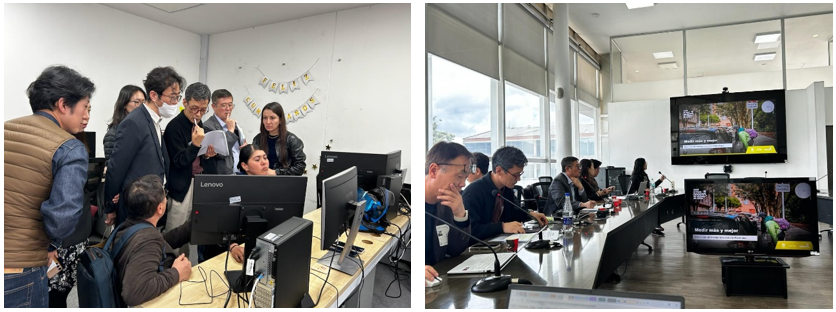
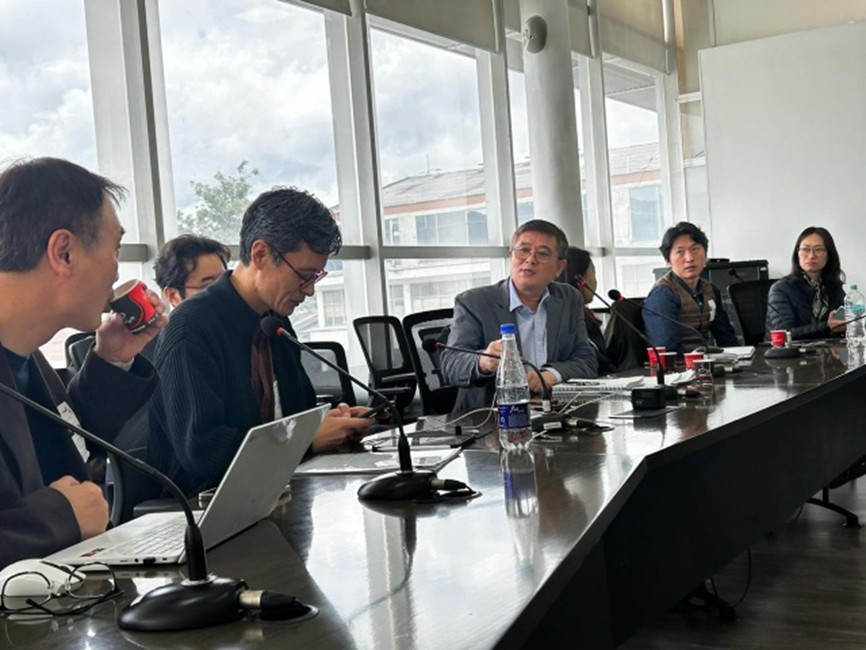
In 2025, Bogotá was selected as one of the winners of the Seoul ODA Challenge—an SMG program for addressing urban challenges in developing countries using Seoul's best practices. As a challenge winner, Bogotá is now working with Korean experts to translate analysis into actionable design. Recent technical missions to Bogotá focused on understanding local mobility conditions and identifying operational needs for a charging zone.
The collaboration will support SDM in developing:
- A smart enforcement strategy using automated cameras and integrated control systems.
- Recommendations for payment, registration, and permit management.
- A data framework for monitoring traffic and optimizing tariffs.
- Integration of the charging scheme with Bogotá’s existing ITS infrastructure.
- Communication strategies to support user understanding and compliance.
- Opportunities to apply enforcement technology to illegal parking and bus lane monitoring.
- A capacity-building program, including an upcoming study visit to Korea.
A Path Toward Smarter, Fairer Mobility
With support from KGGTF and the leadership of Korean institutions, Bogotá is advancing toward a modern TDM system that can reduce congestion, improve air quality, and generate sustainable funding for public and active transport. This partnership demonstrates how international collaboration and data-driven planning can help cities address complex mobility challenges and shape a more efficient, equitable urban future.